From their own domestic competitions to the AFC Champions League, the Continent’s match officials have shown diligence and professionalism and played a key role in keeping the game alive during the most difficult of circumstances.
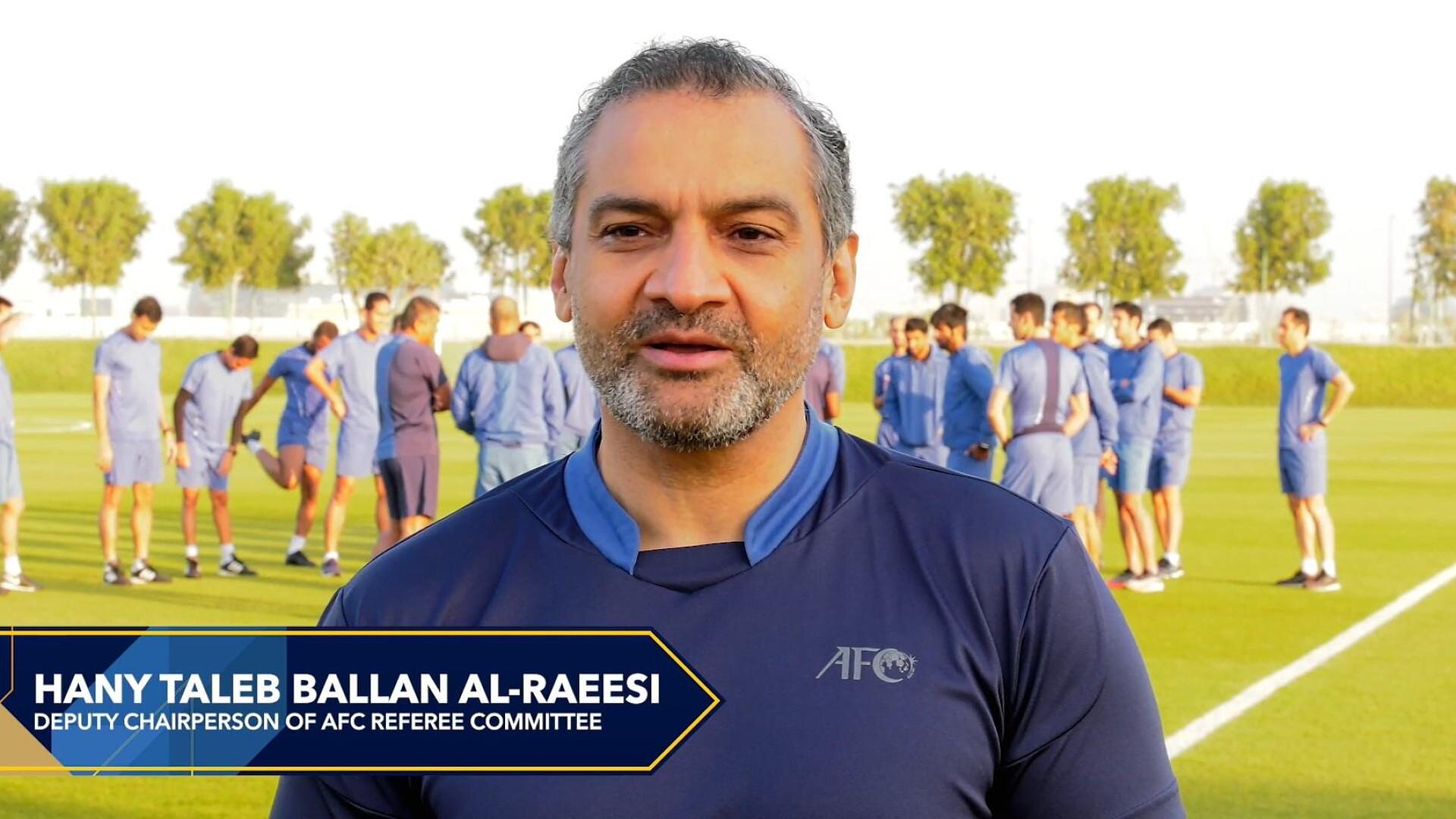
During the closing stages of the ongoing AFC Champions League in Doha, AFC Referees Committee Deputy Chairperson, Hany Taleb Ballan Al Raeesi joined us to share his thoughts on the competition, VAR and how Asia’s refereeing fraternity has navigated a year of unprecedented challenges.
Asian Football Confederation: After what has been a tremendously difficult year around the world, how pleased are you to see your country, Qatar, playing such a big role in facilitating the successful completion of the 2020 AFC Champions League?
“Of course, it’s a great feeling for everybody and all those football lovers, those who are passionate about football in Asia, to see football coming back to life again, and for the most prestigious club competition to be concluded in Qatar.
When the pandemic started all sport activities, in some countries, were put on hold, and in some countries, they were terminated, but it was very important to resume the most prestigious AFC competition.
The only way to conclude this competition was with a centralised venue. Thanks to the help of Qatar, working together with the AFC, we have concluded the competition in the West, and now we will soon complete the competition as a whole. So, thanks very much to Qatar and the AFC for their efforts to conclude the competition.
AFC: After its successful implementation at the national team level, the 2020 AFC Champions League sees VAR (Video Assistant Referee) being used for the first time in an AFC club competition. As a former referee, how important do you think it is to have this additional tool in modern football?
“The VAR is a very important tool that will assist and help the referees to make the correct decision, when needed. Of course, we have started using the VAR in the AFC in national team competitions. We used it in the Asian Cup in 2019, and again for the AFC U23 (Championship) in Thailand in 2020 and we have started using it in our club competitions from the quarter-final round.
“It’s an important tool, it is a tool that can help the referees to take a really critical decision which they cannot see on the field of play. It adds fairness to the game, it adds integrity to the game and also it adds value, for using such an advanced technology, in AFC competitions, which will help to make the competitions as successful as possible.

AFC: What steps have been undertaken to prepare the referees for the use of VAR in the AFC Champions League?
“Of course, the use of VAR has to follow a systematic process. Rigorous training has been done in preparing the referees and all the video match officials who are participating in our competitions in the AFC.
“This training was done by having seminars in KL before the pandemic, and then, when the pandemic started, we have continued taking this responsibility of exchanging the knowledge of the referees and preparing them for such a tournament like the West and the East (AFC Champions League).
“In August, we’ve completed a virtual training for four days for all the referees to refresh them again, to simulate situations, basically to train them on the line of interventions. This four-day cause in August was very important.
“We have also, since March, established a training panel – our educator panel - that again and again, every week, get in touch with the referees, simulate situations with referees and train the referees online, so they can always be ready, mentally and knowledge wise, for the competitions.
AFC: Due to the pandemic, the players in this tournament have been staying in a bio-secure bubble, but so have the referees. How do you think the referees have dealt with this new way of life?
“As we all know, the pandemic has affected everyone around the world. It has affected footballers, businesses, and referees are human, they are also affected, but we ask the referees, always, to do even more than what is expected.
Of course, it’s not easy to be in a bubble-to-bubble bio-frame but again and again, our referees have taken this big responsibility. They have sacrificed a lot to bring football back to life in Asia.
“I would like really to thank all the referees for their commitment. I would like to show my appreciation for all their commitment, for all the rigorous work they have done and their discipline throughout the bubble-to-bubble bio-framework.
They have taken it seriously, of course there is pressure, but this is what refereeing is all about, making the right decisions under pressure, and I’m very proud of our referees, because they have done this.”
AFC: This competition has taken place in three stadiums which will be used for the 2022 FIFA World Cup. Do you think the referees have felt an extra motivation to perhaps return here for that competition in two years’ time?
“In the West and East, we have concluded the potential candidates for the Qatar World Cup in 2022, and for our referees to be able to touch base with three stadiums that I would say are world-class stadiums – Education City Stadium, Khalifa Stadium and Al Janoub Stadium – which will be used in the World Cup, I can feel the inspiration that refereeing in these stadiums has given our referees.
“Although we have had no spectators, this has simulated refereeing on the pitch on a World Cup stadium, and it is an inspiration for all of them. It gives them, I would say, an extra drive, that they would like to be back here in 2022.”
Related News
- Referees
History-making Yamashita revels in refereeing responsibility
- AFC Champions League
Qatar’s Al-Jassim to officiate AFC Champions League Final
- Referees
AFC Referees Committee underlines continued support to Asia’s match officials
- Referees
Kamnueng: I want an Asian female to officiate in a FIFA World Cup
- China PR
Brave Cui’s passion for refereeing undiminished by serious health scare
